VoipReview
August 08, 2004
VoipReview Staff Writer
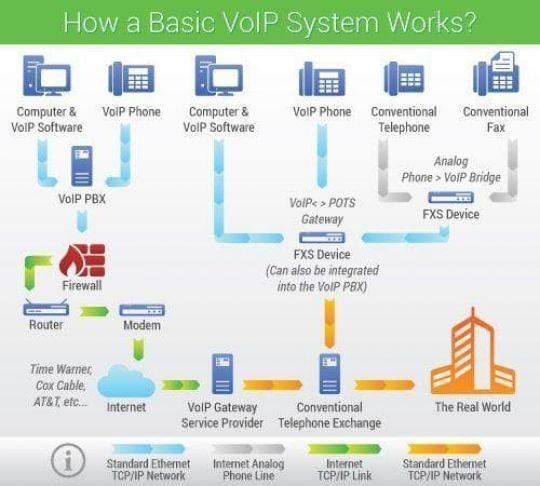
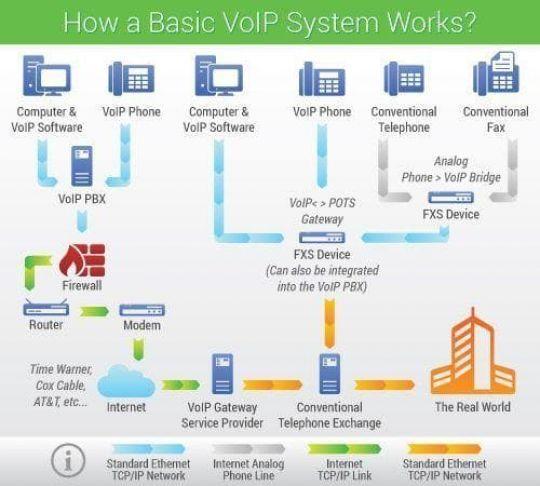
Most people who make long-distance calls have probably at one time or another used VoIP technology. VoIP technology is voice transmission that goes over your Internet. Interestingly enough, most people believe that to use VoIP, you have to purchase something special, plug in a lot of equipment, and so on. In truth, many of the major phone companies that handle your telephone long-distance use VoIP technology and therefore, you may be using it and have no idea.
Okay, so how does VoIP work? The answer is that it depends on how you are using VoIP. For example, the way in which a traditional telephone network is designed is by using circuit switching. This technology has been in place for more than 100 years and when a call is made between two parties, the connection stays open the same amount of time the call lasts. With the connection going both directions, a circuit is what makes the connection. This technology is the base of the Public Switched Telephone Network, called PSTN. The difference with VoIP technology is that it uses packet switching.
Let us say you are making a phone call from your business to a customer. You would pick up the handset, wait for a dial tone, and then dial. That calls becomes routed via a switch with your local phone company, the connection is made, and a circuit is opened between you and the customer. After the conversation is ended and you hang up the handset, the circuit is closed and the connection gone.
During the time the call was in progress, the circuit remains opened. In most cases, the PSTN is transmitted at a standard rate of 64 kilobits per second in each direction. That means the total transmission rate would be double that, at 128 kilobits per second. If you and your customer talked for 10 minutes, the total PSTN used would be 9.4 megabytes. However, not all of the time would be used because people take breaks in conversation. Therefore, quite a bit of the transmission is wasted time.
How does VoIP work differently? For data transmission, one computer to the next, packet switching is used. In this case, the connection between you and your customer is open and constant. That means the connection is opened long enough for a small portion of data, or a packet to be sent through to the recipient. Therefore, the computer doing the sending is able to send smaller chunks of data, each with an address. The computer then tells your network where to send the data and once received, the other computer reassembles it to original data. This makes the process far more efficient both from a time and cost perspective.
How does VoIP work for voice? In this situation, packet switching makes a way for several telephone calls to use the amount of space used within a circuit-switched network. If you were using PSTN, your 10-minute phone call to your customer would constitute 10 minutes, at a cost of 128 kilobits per second. However, with VoIP technology, that same call may have only been four minutes at a cost of 64 kilobits per second (one way), keeping another six minutes of time open. In other words, in the time you used for a traditional call, with VoIP technology, you could fit two, possibly three calls into the same space. The result is a huge savings!
One of the main advantages of the VoIP technology and the use of packet switching is that this particular technology is already known and understood by data networks. How does VoIP work with protocols? Two primary protocols are used for this technology and both are used for defining the way in which devices connect. The standard protocol of H.323 was created by the International Telecommunications Union. Although it is complex, it provides for real-time videoconferencing and applications of IP telephony. The second protocol is H.323 SIP, which is short for Session Initiation Protocol. This option is much simpler and is used specifically for IP telephony.
If you are not sure which VoIP Company is right for your business, you can talk to your local phone company or research other available options through companies such as [url=www.lucent.com]Lucent[/url], [url=www.nortel.com]Nortel[/url], and even smaller, stand alone companies. We recommend you use our search tool to find a service that is right for you by [url=www.voipreview.org/area.all.aspx]clicking here[/url].